
Bosra: Where Empires Carved Their Legacy in Stone
In the heart of southern Syria, approximately 140 kilometers south of Damascus, lies Bosra, one of the most extraordinary archaeological treasures of the Levant. Resting gracefully within the fertile plains of Hawran near the Jordanian border, this ancient city has served as a crossroads of commerce, culture, and faith for thousands of years.
Few destinations in the region offer such a vivid encounter with layered civilizations. From Nabataean foundations to Roman grandeur, Byzantine devotion, and Islamic refinement, Bosra unfolds like an open-air museum where history is not confined to glass cases: it rises in monumental stone.
Strategic Location and Natural Beauty
Set against a dramatic backdrop of basaltic hills and volcanic landscapes, Bosra benefited from both natural defenses and fertile agricultural land. Its strategic position along ancient caravan routes linking Arabia, Egypt, and the Levant transformed it into a thriving commercial hub.
Merchants once passed through these plains carrying spices, textiles, incense, and precious goods. Along with trade came ideas, architecture, and cultural exchange. The prosperity generated by these routes allowed Bosra to flourish as a vibrant economic and intellectual center.
The surrounding Hawran region, known for its rich soil, ensured agricultural sustainability, reinforcing the city’s long-term stability and importance.
From Ancient Settlement to Roman Capital
Archaeological findings reveal that Bosra has been inhabited since at least the 2nd millennium BCE. However, its golden age began under Roman rule when it became the capital of the Roman province of Arabia.
Under Roman administration, the city transformed into a sophisticated urban center with paved streets, colonnaded avenues, bathhouses, temples, and advanced water systems. Bosra became a powerful example of Roman urban planning seamlessly integrated with local traditions and basalt stone craftsmanship unique to the region.
The legacy of this era remains astonishingly intact, making the city one of the most important Roman archaeological sites in the Middle East.
Architectural Marvels That Defy Time
The Roman Theater: A Masterpiece of Antiquity
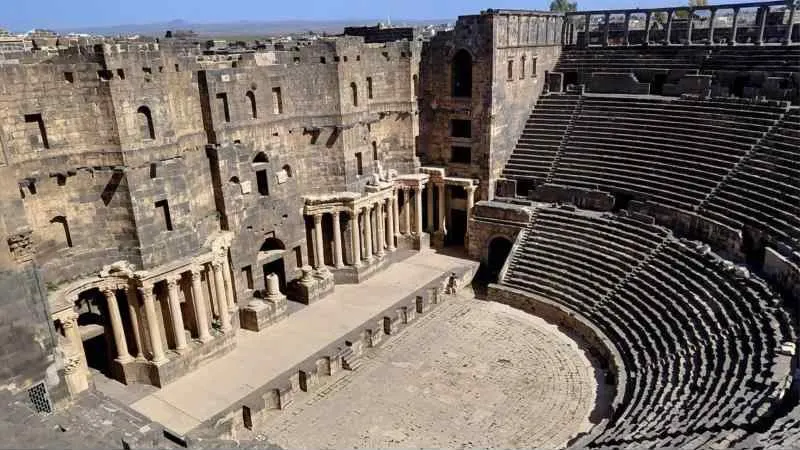
The crown jewel of Bosra is undoubtedly its Roman Theater, one of the best-preserved ancient theaters in the world. Built in the 2nd century CE, this monumental structure could accommodate around 15,000 spectators.
Unlike many Roman theaters that survive only in fragments, this one stands almost fully intact. Its towering arches, elaborate stage backdrop, and imposing fortress-like exterior reflect both artistic brilliance and military adaptation. In later centuries, the theater was fortified, transforming it into a defensive citadel.
Standing within its vast stone embrace, visitors can easily imagine dramatic performances, musical events, and public ceremonies that once animated the space.
The Roman Circus and Agora
Beyond the theater, Bosra reveals more of its Roman magnificence. The remains of a vast Roman circus once hosted exhilarating chariot races and public spectacles. Though time has softened its outlines, the scale of the structure hints at the city’s former vibrancy.
Equally significant was the Roman agora, the commercial and social heart of the city. Here, traders negotiated deals, citizens debated politics, and daily life unfolded beneath colonnaded walkways. Exploring these ruins offers a tangible connection to the rhythms of ancient urban life.
Byzantine Flourishing and Christian Heritage
With the rise of the Byzantine Empire, Bosra continued to prosper as both a fortified city and a prominent religious center. Strong defensive walls, many of which still stand, showcase the strategic importance of the settlement during this era.
Numerous churches and monasteries were constructed, reflecting the city’s growing spiritual influence. Among them stands the remarkable Church of St. Thecla, known for its architectural refinement and historical significance. Intricate detailing and early Christian design elements demonstrate the craftsmanship and devotion of the period.
This era solidified Bosra as not only a commercial center but also a beacon of faith in the region.
Islamic Era and Continued Significance
Following the Islamic conquest in the 7th century, Bosra remained an important regional city. It became a stop along pilgrimage routes to Mecca and continued to serve as a cultural meeting point.
Islamic architectural additions blended harmoniously with earlier Roman and Byzantine structures, further enriching the city’s layered identity. This coexistence of civilizations is one of the defining characteristics of Bosra, where each era left its imprint without erasing what came before.
Preservation Amid Modern Challenges
In recent decades, conflict and instability have affected many historic sites across Syria. Bosra has faced damage from neglect and sporadic destruction. Recognizing its global value, UNESCO designated the site as a World Heritage location, underscoring its universal significance.
Restoration and preservation initiatives are ongoing, led by heritage authorities and international organizations committed to safeguarding its monuments. These efforts aim to ensure that future generations will continue to experience the architectural brilliance and historical depth of this remarkable city.
Visiting Today: A Journey Through Time
To walk through Bosra today is to journey across millennia. Visitors can wander ancient streets, stand beneath monumental arches, and gaze across sweeping plains that once carried caravans of the ancient world.
The harmonious blend of Roman engineering, Byzantine spirituality, and Islamic heritage gives the city a rare and compelling atmosphere. Unlike many archaeological sites that feel distant from daily life, Bosra remains deeply connected to its surroundings and community.
A Testament to Resilience and Legacy
Through conquest, transformation, and modern adversity, Bosra endures as a symbol of resilience. Its basalt stones tell stories of trade caravans, imperial power, sacred devotion, and cultural exchange.
More than an archaeological destination, it is a living testament to human creativity and continuity. Every column, arch, and weathered inscription invites reflection on the civilizations that shaped southern Syria and the broader Mediterranean world.
For travelers seeking authenticity, depth, and awe-inspiring heritage, Bosra offers not merely a visit, but an unforgettable encounter with history itself.