
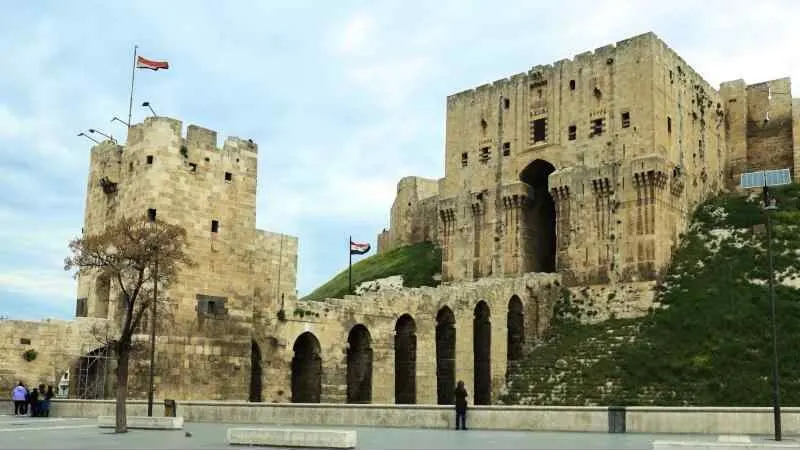
Hidden among the rolling limestone hills of northwestern Syria lies a settlement that captures the essence of Late Antique rural life. Brad stands as one of the most evocative locations within the region’s celebrated “Dead Cities,” a network of villages that once flourished through agricultural prosperity, architectural refinement, and spiritual vitality. These settlements collectively preserve an extraordinary record of daily routines and religious transformation between the 4th and 6th centuries AD, when Christianity reshaped the social fabric of communities across the eastern Mediterranean.
Though modest in scale compared to larger archaeological destinations, Brad offers visitors and scholars an immersive window into the past. Wandering through its remains reveals churches, homes, and communal spaces that reflect both material success and devotional commitment. The peaceful landscape surrounding it deepens this connection to history, allowing travelers to experience the atmosphere of continuity that defines its cultural importance.
Historical Background
The growth of Brad unfolded during a period when northern Syria benefited from fertile agricultural lands and expanding trade connections. Communities across the limestone massif invested in durable stone construction, producing settlements capable of enduring both environmental and political change. Within this environment, it emerged as a thriving rural center shaped by economic stability and the strengthening influence of Christian institutions.
Over time, however, shifting trade patterns and broader regional transformations altered this trajectory. Gradual economic decline and demographic changes contributed to abandonment, echoing the fate of many neighboring villages. Even so, the limestone architecture of Brad survived, preserving an archaeological narrative that continues to inform historical understanding today.
Architectural and Archaeological Features
Among the defining qualities of Brad is the richness of its architectural remains. The site encompasses churches, monastic complexes, and residential structures that together illustrate the organization of a Late Antique settlement. Basilica-style churches showcase refined stone craftsmanship and highlight the central role of faith in shaping community identity within Brad.
Key features include:
- Monastic complexes: Evidence of structured religious life and spiritual retreat associated with it.
- Residential remains: Carefully constructed homes that reveal patterns of domestic life and social organization.
- A monumental tomb: Likely dating to the 2nd or 3rd century AD, pointing to earlier occupation before the later Christian prominence of Brad.
- A bath complex: A rare and distinctive structure reflecting Roman cultural influence within rural environments connected to it.
Together, these elements illustrate a layered transition from classical traditions to a Byzantine Christian identity, shaping the lived experience preserved in Brad.
Cultural Significance
Beyond its physical structures, Brad contributes to a UNESCO-recognized cultural landscape encompassing the ancient villages of northern Syria. This broader network reflects the resilience and sophistication of rural societies during Late Antiquity. Agricultural production, trade interaction, and evolving spiritual practices all influenced settlement planning, and Brad exemplifies how these forces intertwined.
Scholars continue to examine the preserved architectural fabric to better understand building methods, spatial relationships, and communal identity. As a case study, Brad remains an essential reference point for exploring how rural Christian communities adapted to their environment while maintaining cultural continuity across centuries.
Visiting and Experiencing the Site
Exploring Brad offers a contemplative and atmospheric encounter distinct from more heavily visited destinations. Walking among weathered stone walls and scattered foundations evokes the presence of generations who once animated these spaces. Such moments allow visitors to appreciate the tangible sense of time preserved within Brad.
The surrounding setting enhances the experience. Rolling hills and olive groves mirror the agricultural environment that sustained inhabitants long ago, reinforcing the relationship between landscape and livelihood. Experiencing Brad firsthand provides historical perspective alongside quiet reflection, making each visit both educational and memorable.
Ultimately, Brad represents far more than an archaeological site; it stands as a testament to the endurance and complexity of rural communities in Late Antique Syria. Through its churches, monastic remains, and domestic architecture, Brad reveals how spiritual belief, economic activity, and social interaction combined to form a distinctive cultural identity.
Preserved in limestone and memory, Brad continues to communicate its story, inviting appreciation for civilizations that once flourished there and highlighting the importance of safeguarding such heritage landscapes for future generations.