
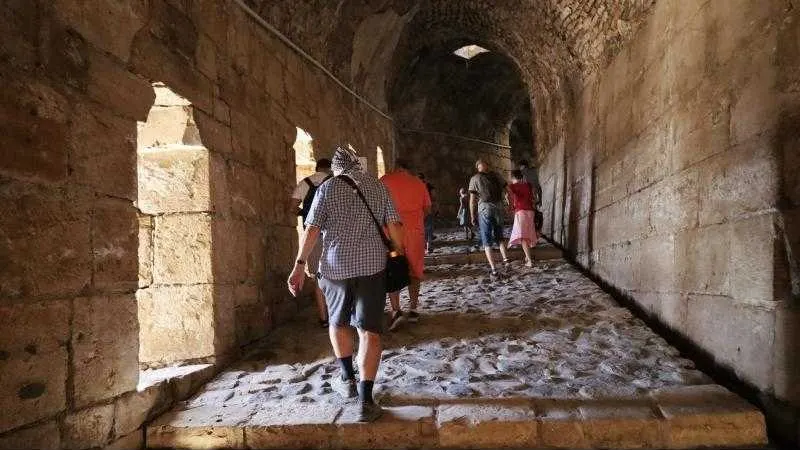
Jabar Castle: A Timeless Guardian Above the Waters
Rising dramatically above the waters of Lake Assad in northern Syria, Jabar Castle stands as one of the most captivating historical landmarks along the Euphrates River. Located in the Raqqa region, this magnificent fortress blends military brilliance, architectural beauty, and natural splendor into a single unforgettable destination. Once towering directly over the Euphrates, the castle now appears to float on an island, an extraordinary transformation brought about by the creation of Lake Assad.
Today, Jabar draws travelers, historians, and photographers alike, offering a rare combination of strategic heritage and serene landscapes. Connected to the mainland by an artificial causeway, the fortress feels both accessible and secluded, creating an atmosphere of discovery the moment visitors approach its towering walls.
The Strategic Importance of Jabar
For centuries, Jabar played a vital role in controlling movement along one of the Middle East’s most important waterways. The Euphrates River has long served as a lifeline for trade, agriculture, and military campaigns. Positioned high above a crucial river crossing, the fortress enabled its rulers to monitor caravans, armies, and merchants traveling through the region.
The castle’s elevated hilltop location provided a natural defensive advantage. From its battlements, guards could see approaching forces from miles away. This commanding vantage point made Jabar not only a military stronghold but also a center of regional influence.
Throughout its long history, the fortress witnessed battles, power shifts, and the rhythms of daily life within its walls. Each stone carries echoes of soldiers standing watch, traders negotiating passage, and communities seeking refuge during uncertain times.
A Masterpiece of Ayyubid Military Architecture
Constructed according to the architectural traditions of the Ayyubid period, Jabar exemplifies medieval Arab military engineering at its finest. The design follows a classic fortress pattern: a fortified outer wall, defensive towers positioned at strategic angles, and a protected central core serving administrative and residential functions.
The surrounding defensive ditch added an extra layer of protection, while thick stone walls were carefully constructed to withstand siege tactics of the era. Every architectural element was intentional: designed to maximize visibility, control access points, and ensure resilience during prolonged conflicts.
Inside the fortress, the layout reflects a self-sustaining stronghold. The central area would have housed leadership quarters, storage rooms, and essential facilities, ensuring that inhabitants could endure extended periods of siege if necessary. The careful integration of function and defense makes Jabar one of the region’s most remarkable surviving examples of Ayyubid fortification design.
The Enchanting Island Setting
One of the most breathtaking features of Jabar today is its transformation into an island fortress. With the construction of the Tabqa Dam in the 1970s, the rising waters formed Lake Assad, submerging the surrounding lowlands and leaving the hilltop castle encircled by shimmering blue waters.
The result is a striking visual contrast: golden stone walls rising above deep blue waters, framed by the vast desert horizon. The artificial causeway that links the castle to the mainland adds a dramatic approach, enhancing the sense of stepping into another era.
From the top of the battlements, visitors are rewarded with panoramic views stretching across Lake Assad and the surrounding arid landscape. The scene is particularly magical at sunset, when the sky reflects across the water and the fortress walls glow in warm hues.
Cultural Legacy and Historical Value
Beyond its military function, Jabar represents an essential chapter in Syria’s cultural narrative. The fortress stands as a symbol of the Raqqa region’s historical importance as a crossroads of trade, politics, and regional power struggles.
Archaeological studies and historical documentation have revealed insights into social organization, defense strategies, and daily life during the medieval period. The castle serves as a tangible reminder of how architecture, geography, and politics intertwined to shape the region’s destiny.
In recent decades, the site has faced challenges due to regional instability. Damage from conflict, looting, and environmental factors has threatened parts of the structure. Nevertheless, ongoing documentation and preservation efforts aim to protect Jabar for future generations, recognizing its irreplaceable cultural and historical significance.
Visiting Jabar Today
Exploring Jabar offers far more than a simple sightseeing experience: it is a journey into centuries of history. Walking through its ancient gateways, climbing its towers, and standing along its defensive walls allows visitors to imagine the fortress in its prime.
The island location adds an element of tranquility rarely found at major historical sites. The surrounding waters create a peaceful atmosphere that contrasts beautifully with the fortress’s martial origins. For travelers seeking destinations beyond the typical tourist path, Jabar provides a unique blend of adventure, reflection, and heritage appreciation.
Photographers find endless inspiration in the site’s symmetry, textures, and dramatic landscape. History enthusiasts appreciate the authenticity of its preserved structures. Casual visitors are simply captivated by the surreal experience of a medieval castle rising from a lake.
Why Jabar Remains a Must-See Landmark
Few places combine strategic brilliance, architectural mastery, and natural beauty as seamlessly as Jabar. Its commanding presence above the Euphrates basin, its transformation into an island sanctuary, and its enduring historical narrative make it one of Syria’s most extraordinary heritage sites.
As preservation efforts continue, visiting Jabar not only offers a memorable cultural experience but also contributes to sustaining awareness of the region’s rich past. The fortress stands as a testament to resilience: of stone, of history, and of cultural identity.
Jabar is more than a castle. It is a story carved in stone, rising above water and time, inviting every traveler to witness the grandeur of a civilization that once guarded the mighty Euphrates.