
A City Where Civilizations Met
Palmyra stands as one of the most extraordinary archaeological treasures of the ancient world. Rising from the heart of the Syrian desert, this legendary oasis city once connected the great empires of Rome and Persia, serving as a thriving crossroads of trade, culture, and ideas. For centuries, Palmyra served as a bridge between East and West, blending Greco-Roman elegance with rich local traditions to create a civilization unlike any other.
Surrounded by palm groves and desert horizons, the city flourished thanks to its strategic position along the Silk Road. Merchants traveling between the Mediterranean and Mesopotamia found rest and opportunity here, transforming the settlement into a powerful commercial hub. Its prosperity allowed it to develop grand architecture, advanced urban planning, and a distinct cultural identity that still fascinates historians and travelers today.
The Architecture of Palmyra
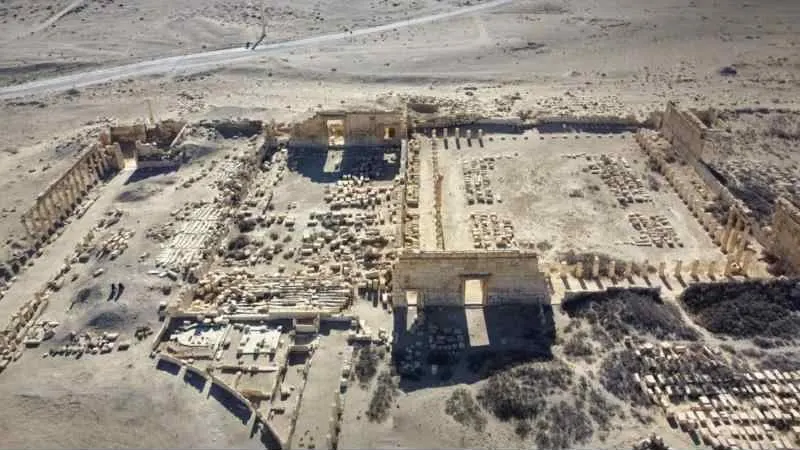
Walking through Palmyra today feels like stepping into a grand open-air museum. The vast colonnades once guided traders and dignitaries through the bustling heart of the city. The Great Colonnade of Palmyra stretches across the landscape in elegant symmetry, illustrating the sophistication of its urban planning. This main thoroughfare connected important public buildings, marketplaces, and religious centers, forming the backbone of civic life.
The Temple of Bel, once among the most significant religious structures in the region, demonstrated the city’s spiritual importance. Its design combined classical proportions with local decorative elements, symbolizing the fusion that defined the entire settlement. Nearby, the Roman theater hosted gatherings and performances, offering a glimpse into the social and cultural vibrancy of the time.
Beyond public monuments, the funerary towers and underground tombs reveal deep respect for ancestry and family legacy. Elaborate carvings and portrait sculptures decorated burial chambers, preserving the memory of prominent citizens. These funerary traditions provide invaluable insight into clothing, jewelry, and artistic expression during the city’s golden age.
The Spirit of Palmyra
Beyond its ruins, Palmyra represents resilience and cultural dialogue. Throughout history, it faced invasions, political shifts, and changing trade patterns, yet it repeatedly adapted to new realities. The story of the city is not only one of wealth and architecture, but also of determination and identity in a challenging desert environment.
Its dramatic setting enhances its mystique. Golden light at sunrise and sunset transforms the stone columns into glowing silhouettes against the vast sky. The silence of the desert adds to the emotional impact, reminding visitors that great civilizations can rise in even the most unlikely landscapes.
The legacy of this ancient oasis continues to inspire scholars, architects, and travelers. It stands as a reminder that cultural exchange can lead to extraordinary achievements. The blending of artistic styles, languages, and beliefs created a society that thrived on openness and connectivity.
Why It Still Captivates the World
Today, Palmyra continues to inspire global interest for its historical significance and symbolic meaning. It tells a story of commerce, creativity, and coexistence that resonates far beyond the desert where it once flourished. Its columns and temples are not merely remnants of stone; they are enduring witnesses to a time when trade routes shaped empires and cultural dialogue built remarkable cities.
For travelers seeking more than ordinary sightseeing, this ancient site offers depth, perspective, and a sense of timeless wonder. Exploring its avenues invites reflection on humanity’s shared heritage and the enduring power of cultural exchange.
From its monumental architecture to its powerful historical narrative, Palmyra remains a testament to human ambition and artistic brilliance. Even in ruin, it commands admiration, proving that true greatness can withstand the passage of centuries and continue to illuminate our understanding of the past.